

KINGSTON — “Country roads, take me home, to the place I belong, West Virginia, mountain momma, take me home …”
“Sweet Caroline, good times never seemed so good …”
“Doo, doo, doo, looking out my back door …”
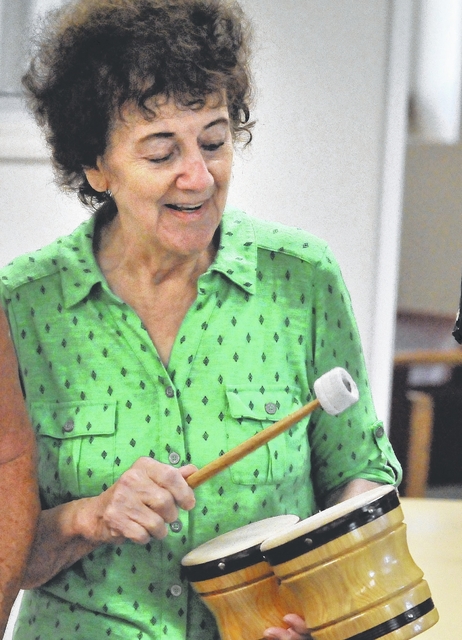
Songs made famous by John Denver, Neil Diamond and Creedence Clearwater Revival were just a few of the “oldies but goodies” close to two dozens older adults sang with gusto on a recent Wednesday morning at the Active Adult Center on Third Avenue.
“I love to sing,” said Betty Lee Frusciante, 80, of Swoyersville.
“It takes my troubles away,” said Sarah Derhammer from Bunker Hill, who shook a tambourine in time to the music.
“Definitely, the blood pressure is going down,” said Barbara Milliken of Kingston, who added the rhythm of a pair of bongo drums.
Rachel Loefflad, a recreation therapist from the Scranton-based Deutsch Institute who led the singing and accompanied the group on ukulele, is conducting a pilot program to see just how beneficial joining a chorus might be.
Before she started the six-week “Sing to Your Health” program at the Active Adult Centers in Kingston and Dallas in late July, Loefflad distributed a questionnaire asking the older adults about chronic pain they might be experiencing, as well as occasional depression, anxiety, irritability, frequency of upper respiratory illnesses and fear of falling. Other questions dealt with whether they enjoy singing and what kind of music they prefer.
When the pilot program is over, she’ll compare the first set of answers with the answers to follow-up questions, and she’ll have blood pressure readings to compare as well. If the results indicate the music is beneficial, Loefflad hopes to make a singing program a permanent offering at the 17 Active Adults Centers in Luzerne and Wyoming counties.
“I would love to train the trainers,” she said.
Through her work with the Deutsch Institute, a non-profit that fosters recreational and leisure opportunities for people with disabilities and special needs, Loefflad leads singing programs at the Verve Vertu art studio in Dallas, through the Department of Veterans Affairs Medical Center in Plains Township and for people going through drug and alcohol rehabilitation.
Participants are sometimes shy about singing at first, she has noticed, but usually end up chiming in.
“By the time it’s midway through, everyone is going strong,” she said.
Loefflad, who studied geriatric care management at Misericordia University, believes group singing can benefit anyone, but especially older adults because it provides exercise, social connections, a chance to create harmony and other positive feelings. “It’s relaxing and energizing at the same time.”
Researchers led by the late Dr. Gene Cohen from George Washington University in the early 2000s conducted a study that indicated older choral singers (average age 80) had fewer doctor visits, fewer incidences of depression and fewer falls than people in a control group.
The senior singers in that study also reported better breathing and better posture and simply feeling good, according to an article on “Singing and Healthy Aging” at chorusamerica.org.
Hoping to build on the earlier research, cognitive neuroscientist Julene Johnson Ph.D. from the University of California San Francisco is in the middle of a five-year study of the effects of choral singing, which she believes could be a cost-effective way to help older Americans stay healthy.
“I don’t know if I’m healthy,” 89-year-old Doris Thompson of Kingston said with a laugh after singing “Oh, What a Beautiful Morning” with the Kingston group. “I just try to keep up.”
The songs Loefflad put together for the seniors brought back good memories, said Nancy Eble, 75, of Harding, who remembers singing during assemblies at the former West Pittston High School.
With a few minutes to go before lunch, the seniors had a chance for a few more tunes: “Hey good-looking, what you got cooking?” they sang in the spirit of Hank Williams. Then it was time for a little Johnny Cash: “Because you’re mine, I walk the line.”